
Whole Home Generator Installation in Broken Arrow, OK
Standby generator installs that keep your home running during storms and outages. We provide same-day availability when schedule allows, and we’ll explain options in plain language so you can choose the right fix or upgrade.
Quick self-check: do you need whole home generator installation?
- Outages knock out your Wi‑Fi, fridge, and HVAC more than once a year
- You rely on medical equipment or work-from-home connectivity
- Storm season makes you nervous about extended downtime
- You’re tired of hauling and fueling a portable generator
- Your home needs automatic transfer (no manual cord setups)
- You want to protect food, sump pumps, and security systems
- You’re planning to add a generator and want it done cleanly
If any of these are happening, we can confirm the cause and recommend the safest path forward.
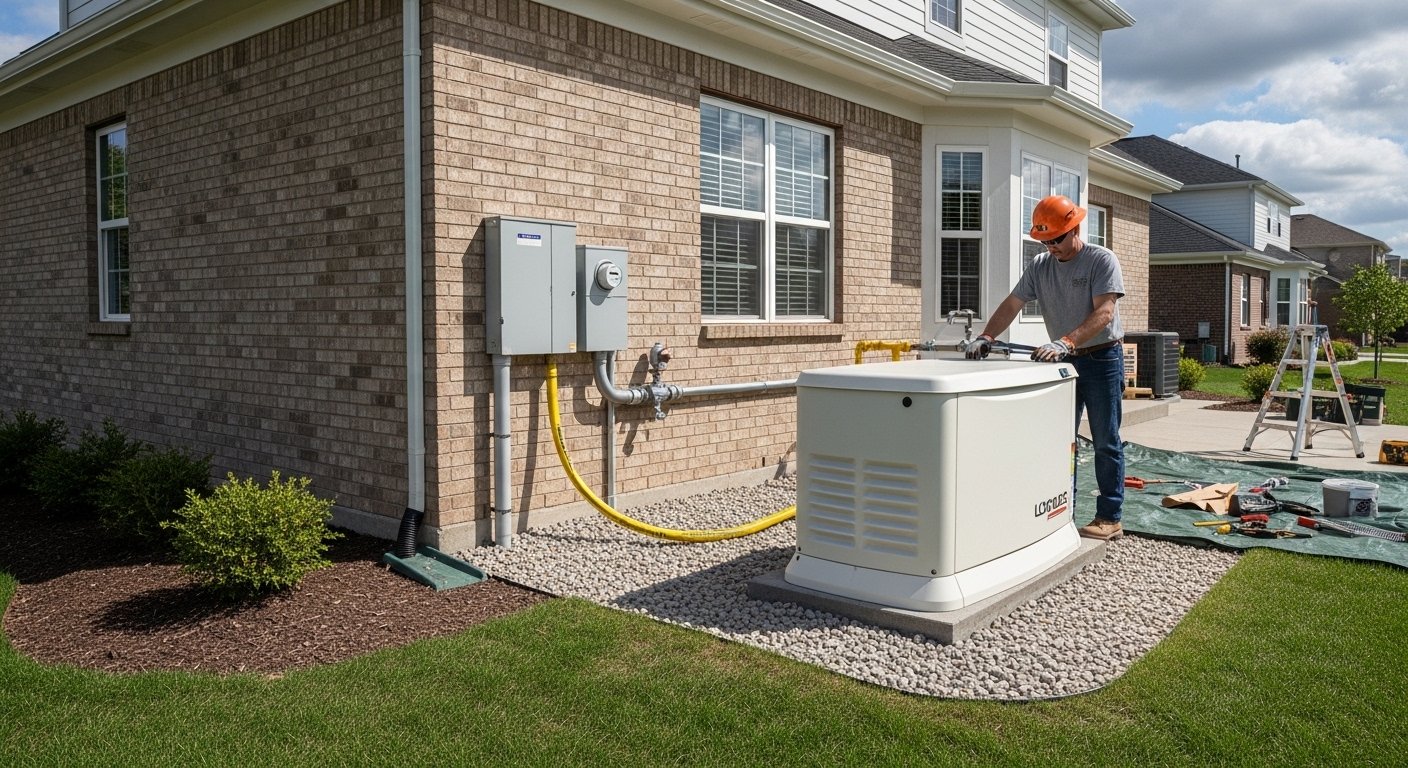
Why whole home generator installation matters in Broken Arrow
Electrical systems rarely fail in a dramatic way first. Most problems show up as small annoyances—tripping breakers, inconsistent performance, or limited capacity—until a remodel, EV purchase, or storm season forces the issue. Our job is to make sure the solution is safe, sized correctly, and finished cleanly.
What we do
- Confirm essential loads and sizing (whole-home vs managed circuits)
- Coordinate transfer switch / ATS placement and circuit strategy
- Install generator electrical connections and controls
- Test start-up, transfer operation, and load performance
- Explain maintenance expectations and how to use the system
Our process
- Load review + site placement discussion
- Electrical scope planning (ATS, critical loads, panel tie-in)
- Install + start-up testing
- Owner walk-through and labeling
- Final verification and documentation
Mid-project check-in
Before we move forward on any expanded scope, we explain the finding, the option, and why it matters—so you stay in control of the decision.
Choosing the right generator size
Generator sizing is where most homeowners get stuck. The right size depends on what you want to power: essentials only (refrigerator, lights, outlets), or whole-home comfort (HVAC, water heater, and larger appliances). We help you set priorities, then match the unit to your electrical service and fuel source.
We also consider start-up loads. Large motors and HVAC equipment can draw more power at start-up than when running, so a generator that “looks big enough” on paper can still struggle without proper planning.
- Essentials-only vs whole-home coverage
- HVAC and motor start-up loads
- Fuel type considerations (natural gas vs propane)
- Placement, clearances, and noise expectations
- Automatic transfer switch requirements
What to expect during installation
A typical standby generator installation involves electrical work plus coordination around fuel and placement. We install the transfer switch, route conductors, bond and ground properly, and test the system under load. Once installed, we walk you through operation, maintenance reminders, and what the system does during an outage.
Good installs are tidy and easy to service later. We keep cable routing clean, label disconnects, and confirm the system behaves correctly when utility power drops and returns.
- Site walk and placement plan
- Transfer switch install and wiring
- Generator set, connections, and testing
- Owner walk-through and labeled controls
- Startup verification and outage simulation
Service areas for Whole Home Generator Installation
If you’re outside Broken Arrow, we also schedule work across the Tulsa metro. Start with your city page below.
- Broken Arrow electrician
- Tulsa electrician
- Bixby electrician
- Jenks electrician
- Owasso electrician
- Claremore electrician
- Coweta electrician
- Catoosa electrician
Looking for this exact service by city?
- Tulsa Whole Home Generator Installation
- Bixby Whole Home Generator Installation
- Jenks Whole Home Generator Installation
- Owasso Whole Home Generator Installation
Pricing factors for whole home generator installation
Every home and commercial space is different. These are the factors that most often change the quote.
- Generator size and load management strategy
- ATS type and integration complexity
- Distance between generator location and electrical equipment
- Need for panel modifications or subpanel work
- Site routing, trenching needs, or special mounting considerations
Related services
If your project overlaps with other electrical needs, these pages can help you plan everything in the right order.
Looking for planning help? Visit the Knowledge Center for cost and comparison guides.
Whole Home Generator Installation FAQs
What’s the difference between a standby generator and a portable unit?
A standby generator is permanently installed and turns on automatically through a transfer switch. Portable units require manual setup, fueling, and safe cord management.
How do you size a whole-home generator?
We review your essential loads and goals. Some homes run everything, while others use load management to keep the system efficient without oversizing.
How long does an installation take?
Most electrical portions are completed in 1–2 days depending on transfer switch complexity and routing.
Do I need an automatic transfer switch (ATS)?
Yes for standby systems. The ATS isolates your home from the grid during an outage and safely transfers power.
Can a generator power central AC?
Often yes, depending on AC size and the generator’s capacity. We’ll verify with specs and a load strategy.
Will my lights flicker when it switches on?
A short flicker can happen during transfer. Proper wiring and configuration reduce noticeable disruption.
How often should a standby generator be serviced?
Most manufacturers recommend regular oil/filter service and periodic testing. We’ll review your model’s schedule at handoff.
Can you add surge protection with a generator install?
Yes. Many homeowners add whole-home surge protection during generator work for additional equipment protection.